

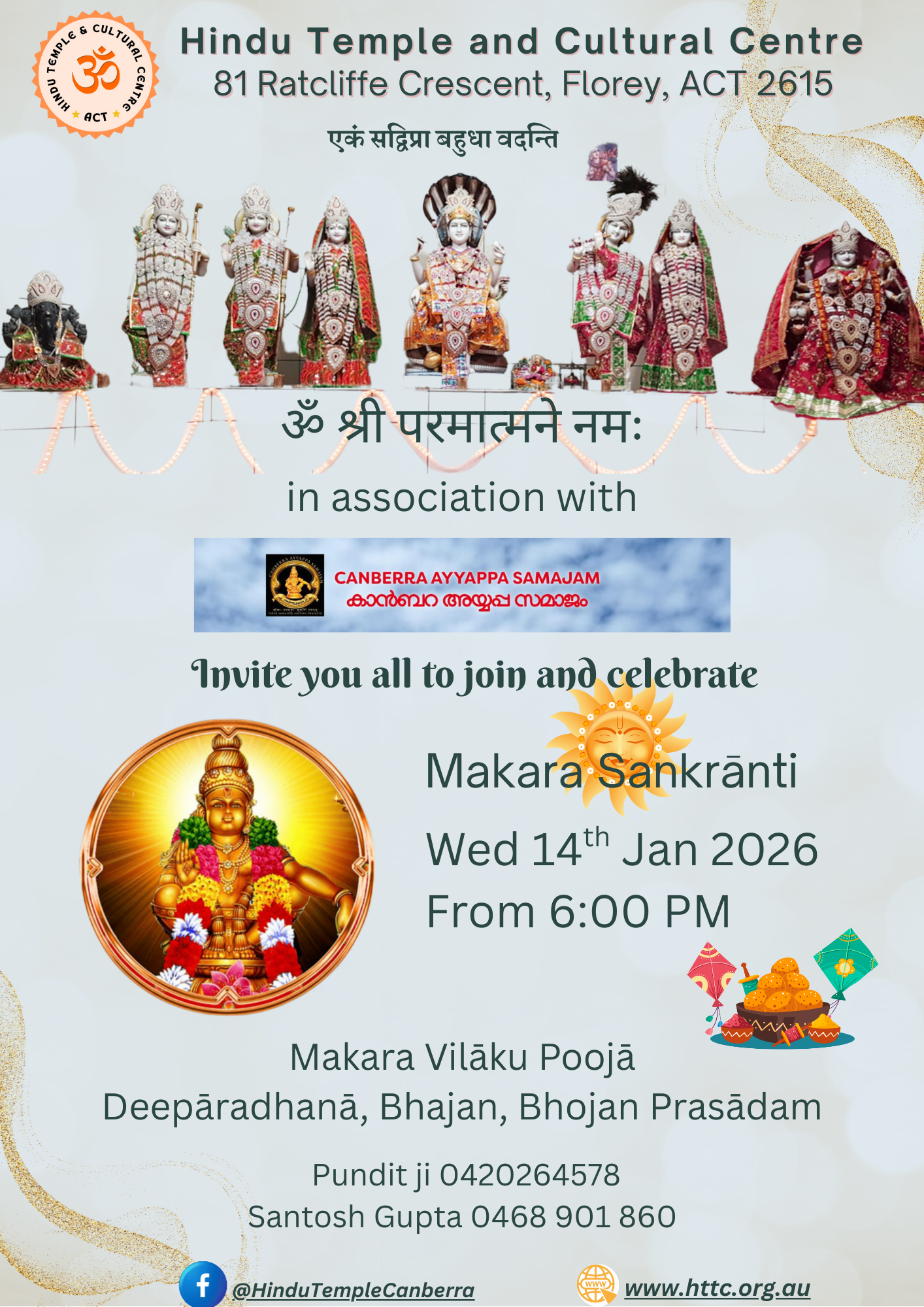
Makara Sankranti is celebrated across India and parts of Asia under many regional names, each reflecting local culture, traditions, and seasonal rhythms. In North India, it is widely known as Makar Sankranti, while in Punjab it is celebrated as Maghi.
In Gujarat and Rajasthan, the festival is famous as Uttarayan, marked by spectacular kite‑flying. Tamil Nadu celebrates it as Pongal, a major harvest festival, and in Andhra Pradesh and Telangana, it is known as Pedda Panduga or Sankranti. Karnataka observes it as
Suggi Habba, and Kerala marks it with the Makara Vilakkuat Sabarimala. In Maharashtra, people exchange sweets saying “Til‑gul ghya, god god bola.” In Assam, the festival is celebrated as Magh Bihu or Bhogali Bihu, while in West Bengal it is known as Poush Sankranti.
Nepal celebrates it as Maghe Sankranti, and in Thailand, it aligns with Songkran (though celebrated in April). In Myanmar, it connects with Thingyan, and in Cambodia, with Moha Sangkran—all marking transitions of the sun and seasonal renewal.
Makara Sankranti in Jagannatha Puri, Odisha is marked by the sacred offering of Makara Chaula Bhoga to Lord Jagannatha, Balabhadra, and Subhadra, prepared from the season’s first harvest.
Devotees take a holy dip in the Mahodadhi sea before visiting the temple, celebrating the sun’s transition into Makara Rashi.


 Visitors Today : 13
 Now Online : 0